 Spanish
 English
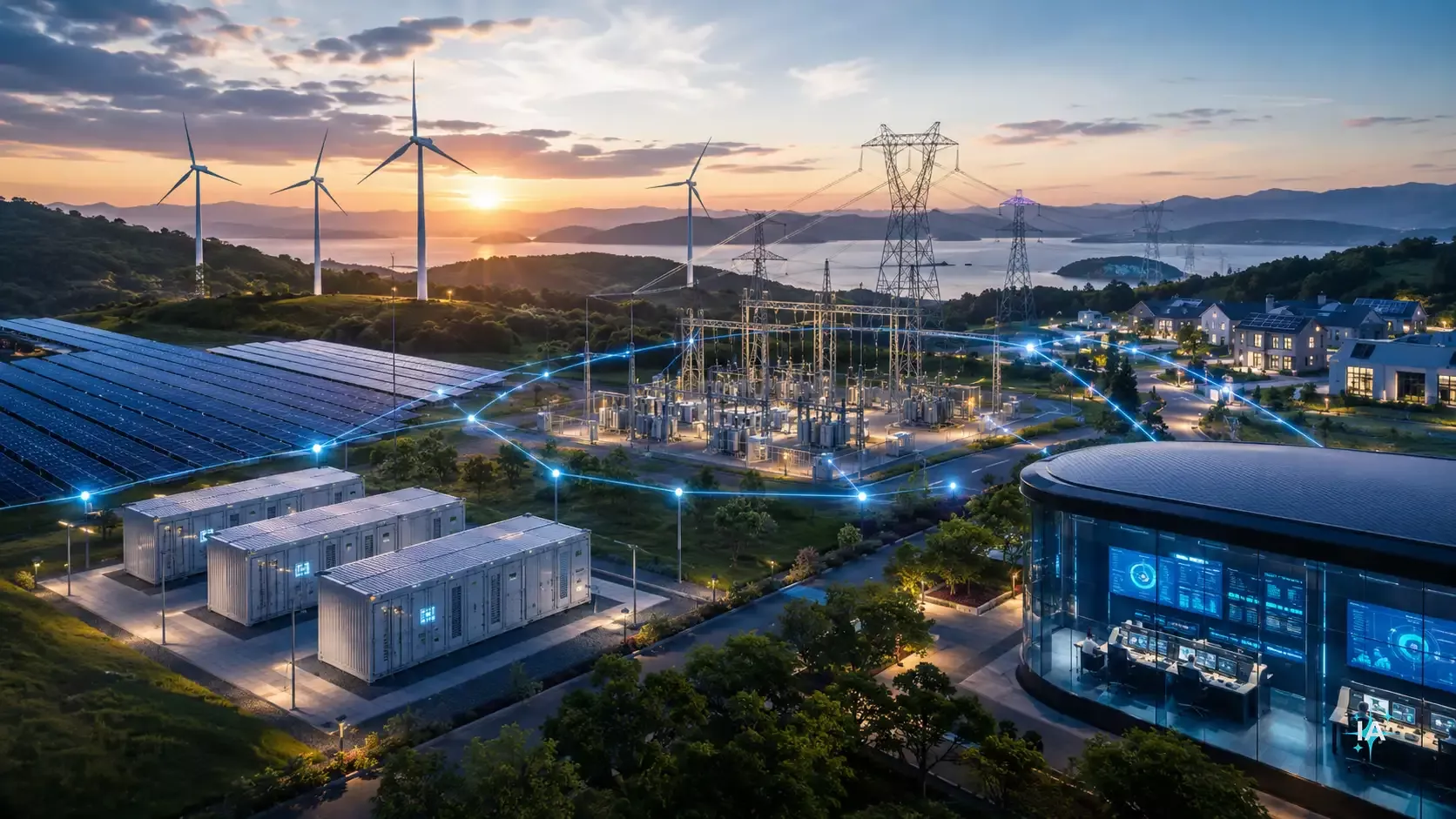
Los requisitos de los proyectos de generación serán distintos en función de cada proyecto y ello demandará soluciones de control diferentes. Por eso, en Smart Energy Control Solutions (SECS) clasificamos cada instalación según cómo opera y cómo se relaciona con la red para definir, desde el principio, la arquitectura más adecuada.
De esta forma, podemos identificar rápidamente cuándo aplicar un Power Plant Controller (PPC), un Energy Management System (EMS) o un Microgrid Controller (MGC) y asegurar que el sistema funcione de forma eficiente, estable y conforme a la normativa.
Clasificación de proyectos energéticos
Agrupamos los proyectos en tres grandes bloques en función de su relación con la red eléctrica y sus necesidades operativas.
Proyectos on-grid
El objetivo principal en este tipo de proyectos es maximizar la energía vertida a red cumpliendo en todo momento con los requisitos del operador del sistema (TSO).
Generación convencional
Single-technology plants, such as solar photovoltaic or wind power, connected to the grid.
PPC
Compliance with regulations and control at the point of connection.
A combination of various technologies: solar, wind, storage or other resources.
PPC + EMS
Compliance with regulations and energy optimisation.
Self-consumption
It covers its own consumption and feeds any surplus into the grid when there is excess generation.
PPC1 + EMS
1In projects where this is necessary.
It covers its own consumption without feeding energy into the grid.
EMS + anti-feed-in system
Active control to limit export.
Off-grid projects
The objective in this case is to ensure system stability and minimise the levelised cost of energy (LCoE)
Solution: Microgrid Controller (MGC) + EMS
Managing the electrical stability of the isolated system: voltage, frequency, synchronisation, power sharing and priorities.
Optimising energy dispatch: when to use batteries, renewable generation, generators or controllable loads to minimise the LCoE.
Dual off-grid/on-grid projects
These facilities are capable of operating both connected to the grid and in off-grid mode.
- Ensure power is supplied to the loads.
- Feed surplus power into the grid.
- If operating with conventional generation, it may require a PPC.
- If operating with self-consumption and surplus energy: PPC.
- If operating without surplus: anti-feed-in system.
Transition management
- Minimise the LCoE as much as possible.
- Solution: MGC + EMS if a battery is present.
- Manage stability and load priorities.
Additional objective:
to manage transitions between off-grid and on-grid modes, both with zero-crossing (blackout) and without zero-crossing (seamless).Key product: Microgrid Controller (MGC).
Basic selection rules
Our classification system allows each scenario to be matched with the most suitable control solution, quickly and easily.
- If it exports to the grid: PPC.
- If it optimises energy: EMS.
- If it can operate in islanded mode: MGC.
- If it cannot export: anti export system.
This classification enables us at SECS to tailor our proposal from the outset of the project and define the most suitable control architecture for each project.
Each facility requires a specific solution, which may combine one or more of these capabilities depending on your needs.

Tell us about your project
At SECS we develop control solutions for renewable energy projects and advise you every step of the way. If you need technical support or would like to discuss a proposal for your facility, please get in touch with us.